 Journal
.png)
Five Websites to Help You Survive A-Levels
A-Level Exams are a beast. A-Levels don't just test what you know.
You face longer exams, harder content, and answers that require critical thinking. You can't just memorize the notes given by your teacher, understand the concepts, and call it a productive day. That's the format.
The right A-Level revision resources, and knowing when to use which, can close that gap fast. The problem is every platform claims to be the best one, so figuring out which is actually worth your evenings in which domain is its own research project.
This guide breaks down the best A-Level revision websites, what each one is actually good at, and how to pick the right one(s) for your subjects and budget.
Time is precious for an A-Level student, so let's dive straight into figuring out which resources are the best for what.
This is the closest thing to an industry standard for A Level revision notes and past paper questions. Every topic is broken down by exam board, and the notes are written to match exactly what examiners are looking for, useful when you're short on time and need the syllabus distilled rather than a textbook's worth of extra detail.
Core features:
- Board-specific revision notes (CIE, AQA, Edexcel, OCR), written in bullet points.
- Topic questions graded by difficulty, plus full past papers with mark schemes
- Model answers annotated with examiner-style commentary and examiner pro tips.
Pros:
- Notes match exactly what examiners reward, so you waste less time revising things that won't earn marks.
Cons:
The free tier is thin; most useful content sits behind an expensive subscription that most Pakistani students can't afford.
Best known for: the most exam-board-accurate revision notes available, full stop.
PMT built its reputation on one thing: a free, sprawling archive of past papers, mark schemes, and topic-wise questions across nearly every A Level subject and exam board. If your revision style is "practice until the patterns click," this is where you should go.
Core features:
- Free archive of past papers and mark schemes across nearly every A Level subject and board
- Topic-wise question banks pulled from multiple years of papers
- Community-contributed notes and checklists
Pros:
- Completely free, and the sheer volume of past paper material is unmatched
- Great for students who learn by pattern recognition, or simply doing enough questions until the exam style becomes familiar
Cons:
- Notes vary wildly in quality since they're crowdsourced, not centrally written
- No structure guiding you through what to revise when; it's a library, not a course
Best known for: the biggest free past-paper archive around.
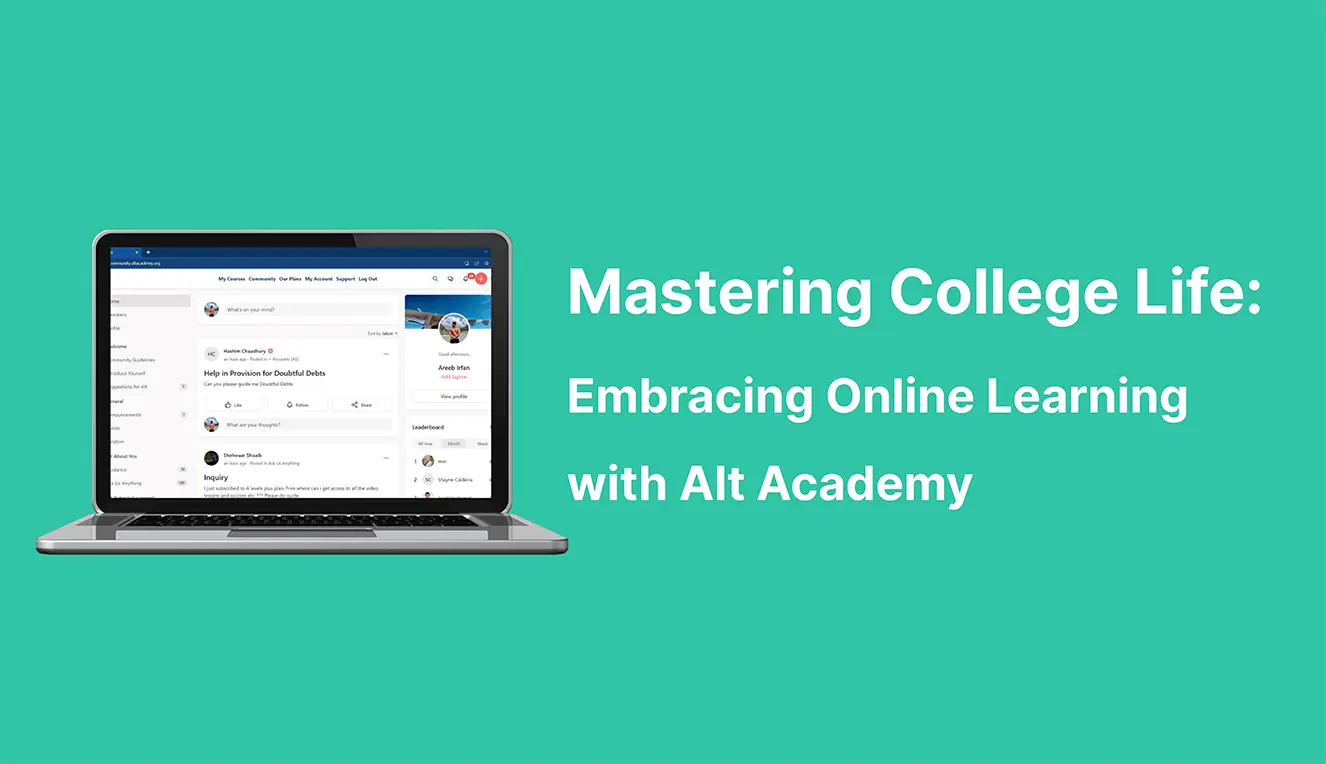
Where the two above give you static notes and papers to work through alone, Alt Academy is built around the part of revision that's hardest to do solo. Every topic is a short, replayable video lecture (rarely more than 15 minutes) rather than a two-hour classroom recording you have to play on 2x to find the golden ten minutes.
Notes and AI-assisted practice sit alongside the videos, and live online classes are there for when you want to ask a question in real time. It's designed for students juggling school, tuition, and self-study who need revision that fits into the gaps rather than demanding a fixed evening slot at a tuition centre or at home.
Core features:
- Short, replayable video lectures (typically under 15 minutes) instead of full classroom recordings within a messy drive folder.
- Notes and AI-assisted practice built around each lecture
- Live online classes for real-time questions, on top of the self-paced material
Pros:
- Built for actually understanding a concept, not just memorizing past-paper patterns, closes the gap PMT and Save My Exams leave open.
- Fits around school and tuition schedules instead of demanding a fixed block of time; you're not scrubbing through a two-hour recording to find ten useful minutes
Cons:
- Newer platform, so the content library isn't as exhaustive yet as PMT's past-paper archive
- Live classes run on a schedule, so they suit planning more than last-minute cramming
Best known for: turning long, hard-to-navigate lecture content into short lessons built for actual comprehension and exam mastery.
Cognito (for Sciences)
If Biology, Chemistry, or Physics is where you're losing marks on application questions, Cognito's short animated videos are worth the detour. They're built to make abstract mechanisms, enzyme kinetics, and electric fields more visually intuitive.
Core features:
- Short animated videos for Biology, Chemistry, and Physics
- Visual breakdowns of mechanisms that are hard to picture from a textbook diagram alone
- Organized by exam board and topic
Pros:
- Genuinely good at making abstract processes click: enzyme kinetics, electric fields, etc
- Videos are short enough to use as a quick fix for one confusing topic, not a whole revision session
Cons:
- Doesn't cover a full syllabus walkthrough; it's a supplement, not a primary resource
- Limited to the sciences, so no use for essay-based or humanities subjects
Best known for: making hard concepts easy to visualize.
Past papers are the closest thing to a crystal ball for A Levels; they show you exactly how examiners phrase questions, where the marks actually sit, and which topics keep resurfacing. PapaCambridge exists purely to get you as many of those papers as possible, for free, without any of the extra content that other sites bundle in.
Its Core features:
- Free repository of past papers, mark schemes, and specimen papers for Cambridge (CIE) qualifications
- Organized by subject, session, and paper variant going back many years
- Also hosts syllabus documents and grade thresholds
Pros:
- One of the most complete Cambridge past-paper archives available for free, including older sessions harder to find elsewhere
- Simple, no-frills layout; you're not wading through ads or account walls to get a paper
Cons:
- No notes or teaching content; it's papers only.
Best known for: the deepest free archive of Cambridge past papers, specifically.
So which one do you actually use?
None of these sites is meant to carry your entire revision alone. They're built for different jobs, and the students who do well tend to stack a few rather than betting everything on one.
If you're studying for Cambridge, PapaCambridge for past-paper volume is a solid and free starting point for practice. Layer in PMT for even more practice questions, and Cognito whenever a science mechanism just isn't clocking. Save My Exams is worth the subscription if you want notes written by real examiners.
Here's the catch with all of it, though: every resource on this list assumes you already understand the concept and just need to practice, memorize, or refresh it. They are meant for revision only.
PMT and PapaCambridge hand you questions with no explanation. Save My Exams' notes are thorough, but there's no one there to explain it differently if the student still does not understand the complex concept. Stack all of them, and you can still hit a wall on a past paper because nobody ever actually taught you why the concept works and how to master it specifically for the exam you are taking.
That's the one job none of these free (or even paid) resources are built for, and it's the actual bottleneck for most A Level students.
That's why Alt Academy exists. Instead of a two-hour lecture recording, every topic is a short video, under 15 minutes, built to teach the concept properly the first time.
Notes and AI-assisted practice sit right alongside each lecture, so you're not bouncing between 67 tabs to piece your revision together. And when a video isn't enough, live online classes let you actually ask the questions you need to master complex concepts.
If you're already juggling school, tuition, and a stack of past papers, the truth is that you don't have time to reverse-engineer understanding from a mark scheme. Alt Academy is built to save you that time, hassle, and money.
Overall Best Pick: Alt Academy
Best if you are on a tight budget and need free resources: Physics and Maths Tutor
Good Luck with your Exam Revision!




%2520(1).png)

-p-1600.webp)



.png)